[Skip to Content]
 Visit us on YouTube View our RSS Feed
Visit us on YouTube View our RSS Feed Visit us on YouTube View our RSS Feed May
26

Posted by liaison on May 26th, 2026
Posted in: Funding
This is a guest post written by funding recipient, Emanuele “Pelo” Pelosi. Pelo used NNLM Region 4 professional development funds to attend the World Congress of Pediatric and Adolescent Gynecology last month. If you are interested in obtaining funding for professional development opportunities, we are currently accepting applications. Applications will be accepted and awarded on a rolling basis until January 2, 2027 at 5:00 pm MT or when the funds have been depleted. Please email region4@nnlm.gov with any questions you may have.
Attending the World Congress of Pediatric and Adolescent Gynecology 2026 was an especially meaningful experience both professionally and personally. Our team’s research focuses on understanding the genetics and pathogenesis of Müllerian anomalies and their associated comorbidities, and this conference brought together clinicians, surgeons, researchers, and patient advocates working across many aspects of these complex conditions. It was a unique opportunity to hear directly from experts caring for patients across the lifespan while also learning about emerging research and evolving standards of care.
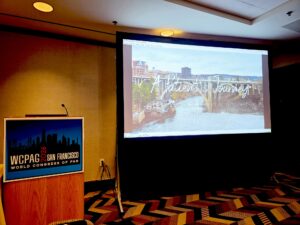
During the WCPAG 2026, our video titled “A Patient’s Personal Account of Navigating a Müllerian Anomaly Diagnosis” was presented. Funded through an engagement and outreach award from the U.S. National Library of Medicine, the project highlights the lived experience of a young woman diagnosed with Obstructed Hemivagina and Ipsilateral Renal Agenesis (OHVIRA) syndrome. Through candid interviews with the affected girl, her mother, and a pediatric gynecologist member of our team, the film explores the medical, emotional, and psychosocial challenges associated with delayed diagnosis, chronic pelvic pain, and navigating the healthcare system. Presenting this work at WCPAG was especially rewarding as the audience deeply appreciated the importance of incorporating patient voices into education and clinical care. The discussion reinforced how valuable patient-centered resources can be for improving communication, empathy, and health literacy.
In addition, several sessions stood out during the conference. An impactful presentation examined cervical cancer screening and cervical dysplasia in patients with Müllerian anomalies. The study reported a high prevalence of abnormal cervical cytology, in a large cohort of patients with Müllerian anomalies, including cases requiring excisional procedures and one case of cervical cancer. As this was among the first studies to systematically evaluate cervical cancer screening outcomes in this population, it raised important questions regarding whether patients with Müllerian anomalies may represent an underrecognized high risk group requiring individualized surveillance strategies. For researchers and clinicians in this field, these findings underscore the importance of longitudinal follow-up and continued investigation into the relationship between congenital reproductive anomalies, associated comorbidities, and gynecologic health outcomes.
 Another particularly interesting presentation focused on familial and genetic aspects of Müllerian anomalies. A cross-sectional international survey evaluating the prevalence of Müllerian anomalies and infertility among relatives of individuals with MRKH further supported the idea that these conditions likely have an important genetic component. This aligns closely with our own research interests and highlighted the growing momentum toward collaborative studies aimed at uncovering the molecular mechanisms underlying these disorders.
Another noteworthy trend throughout the conference was the increasing emphasis on multidisciplinary and longitudinal care. Multiple presentations highlighted the importance of integrating pediatric gynecology, reproductive endocrinology, psychology, genetics, and minimally invasive surgery to optimize outcomes for adolescents with Müllerian anomalies. Advances in imaging, fertility preservation, and individualized surgical planning were recurring themes, particularly in complex obstructive anomalies.
Overall, WCPAG 2026 reinforced how rapidly the field is evolving toward more patient-centered, evidence-based, and multidisciplinary approaches. Moreover, it provided a deeper appreciation for the importance of combining basic science research with education, and compassionate clinical care. Our team looks forward to applying these perspectives to our own work and continuing collaborations that ultimately improve diagnosis, management, and quality of life for patients with Müllerian anomalies.
